
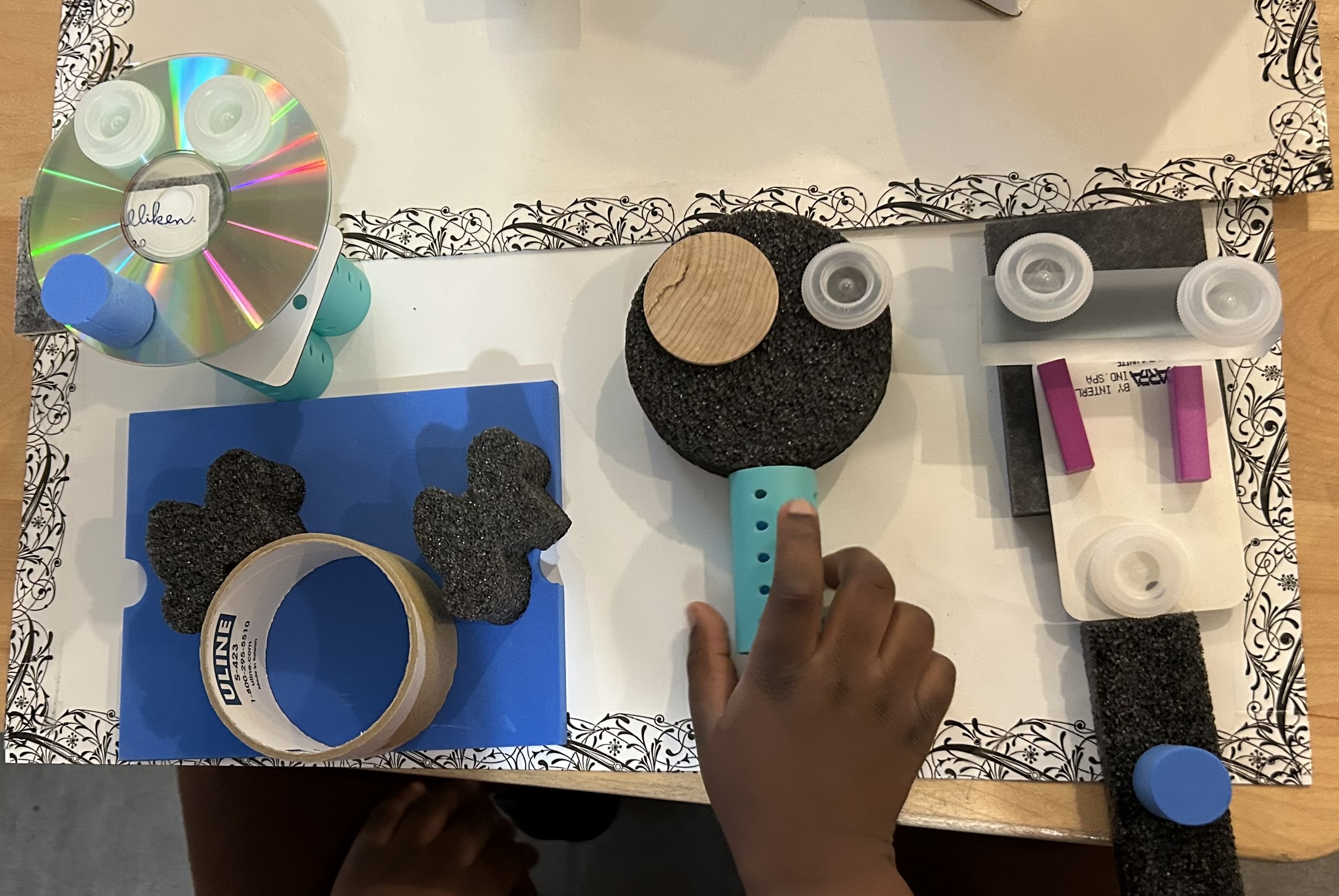
When Annmarie first started using Treasure Boxes in her kindergarten classroom, she wasn’t looking for a new curriculum. She was looking for opportunities for children to think, create, and explore in ways that felt meaningful.
More than a decade later, what she remembers most is not a specific lesson, but the excitement.
“The kids were always excited when the Treasure Boxes came out. They looked forward to it every time.”
For approximately 12–13 years, Annmarie integrated Treasure Boxes into her classroom. During that time, she watched children build, imagine, collaborate, and often surprise her with the learning that emerged naturally through play.
One thing she noticed repeatedly was how academic concepts surfaced without being explicitly taught.
“Math and science were always there. Counting, measuring, comparing sizes. We’d see children experimenting with ramps and balls and talking about what rolled faster or farther. They were exploring force and gravity without even realizing it.”
What stood out was that these moments were child-led. Rather than following instructions, children followed their own questions.
Books often became invitations for making. After reading a story, children would use the materials to respond in unexpected ways.
“The books that came with the kits really inspired them. We’d read something and then they’d create their own version, their own interpretation.”
The materials themselves played an important role. Annmarie remembers children being especially drawn to the variety of textures and loose parts.
“They loved the tiles. There was something about having all these different materials together that sparked ideas. It felt different from toys that already have a purpose.”
She often saw children building on one another’s thinking. One child would start a structure and others would join in, expanding the idea.
“I remember a group making a house. Then somebody added a kitchen. Another child wanted a swimming pool. Then somebody else added a jacuzzi. The project kept growing because they were listening to each other’s ideas.”
For some students, the Treasure Boxes became an especially important space.
“There were children who struggled with reading or writing, and this gave them another way to show what they were thinking. It was an outlet.”
Not every child could easily explain their ideas with words. Annmarie learned to ask open-ended questions and give children multiple ways to communicate.
“Sometimes they couldn’t verbalize what they were thinking, but they could point to it, build it, or draw it in their journals. That was important.”
She also noticed something else: classroom behavior improved.
“The engagement was so high. They were busy, focused, and invested in what they were doing.”
The success of the experience wasn’t accidental. Clear routines helped children use the materials responsibly.
“We always had expectations. Materials stayed on the mat. We didn’t switch things between boxes. The structure actually helped the creativity.”
Today, Annmarie works as an ESL specialist and occasionally introduces Treasure Boxes to older-grade teachers. The biggest challenge, she says, isn’t the materials.
It’s time.
“There’s so much pressure to cover curriculum. Finding the time is the hardest part.”
Yet even after years away from her kindergarten classroom, she remains convinced of the value of the experience.
“I never had to force the learning. The literacy came up. The math came up. The creativity came up. The collaboration came up. It all happened through the materials.”
Her reflection speaks to something many educators experience when children are given open-ended materials and time to explore: learning doesn’t disappear when play enters the room. Often, it becomes more visible.
And perhaps that is why, after more than a decade, what Annmarie remembers most isn’t a lesson objective or worksheet.
It’s the children asking,
“Are we doing Treasure Boxes today?”


